How IT WORKS
1. Pour a collodion solution containing dissolved iodide and bromide salts evenly across a clean glass or blackened metal plate, tilting it to coat the whole surface — this happens just minutes before exposure, under dim light.
2. Sensitize the still-wet plate by immersing it in a silver nitrate bath, which reacts with the iodide and bromide already in the collodion to form a light-sensitive silver salt within the film.
3. Load the dripping plate into a light-tight holder, carry it to the camera, and expose. Collodion is far more sensitive than daguerreotype chemistry, so exposures run from a couple of seconds in bright light to under a minute in duller conditions.
4. Return to the darkroom, or dark tent in the field, immediately and develop the image while the plate is still wet — before the collodion can dry and lose its sensitivity.
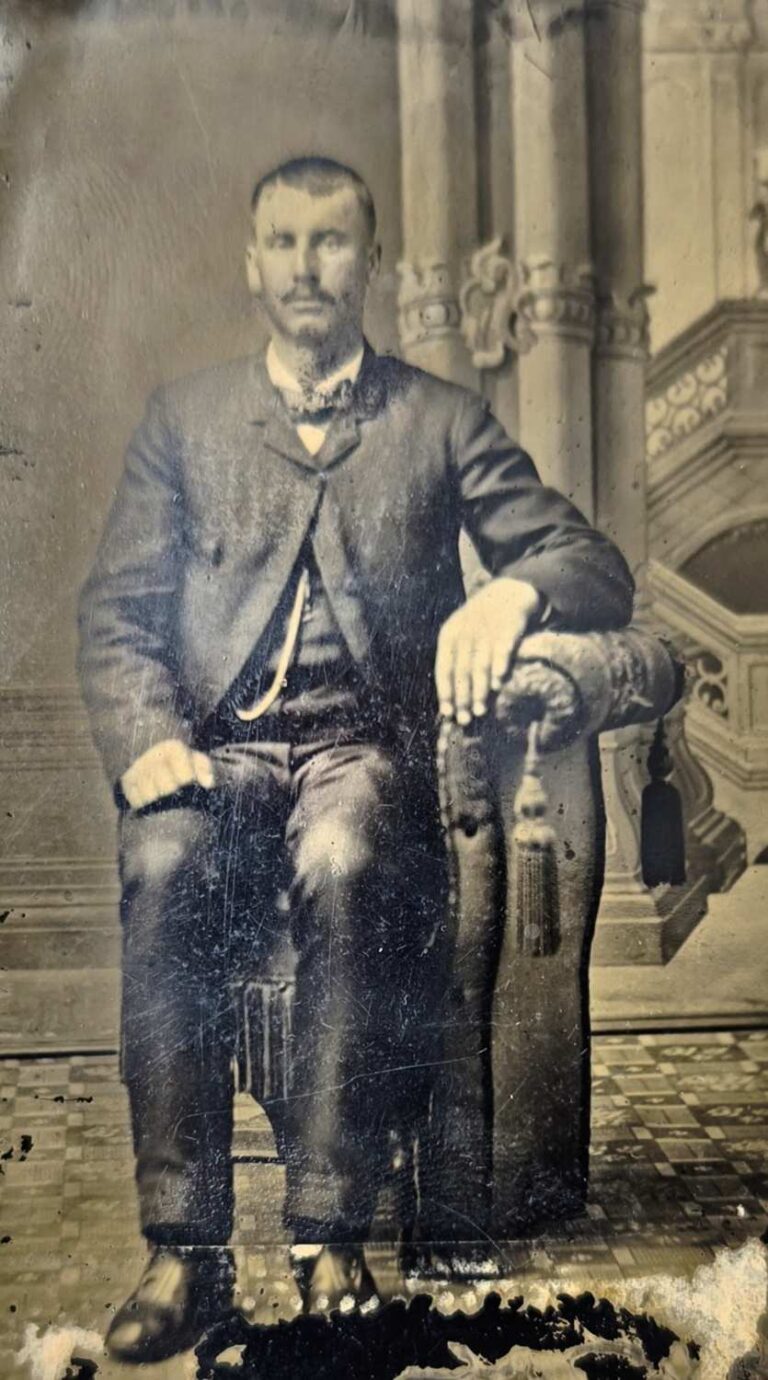
5. Fix the plate to clear the remaining unexposed silver, then wash, dry, and varnish it to protect the delicate emulsion underneath.On glass backed in black, or on black-lacquered iron, the thin, underexposed image reads as a positive — an ambrotype or a tintype.
6. On clear glass left unbacked, the same plate serves instead as a negative, ready to print multiple paper positives.